Introduction
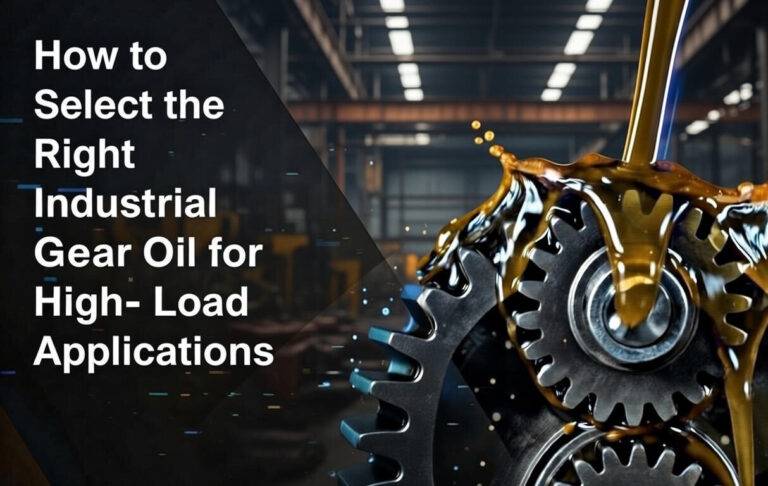
If heavy machinery is your everyday life, as a plant manager, maintenance engineer, or industrial gear oil distributor, you must be aware that choosing the right lubricant is not just a simple task. It determines whether everything will run smoothly or if you will hear the grinding metal, which is the “machine” that costs you the most money, all along. We will explain in detail everything you need to know about how to pick out the best industrial gear oil for high, load applications, in this guide which is quite comprehensive.
We mean, high load gear lubrication that can resist extreme pressures, gear oil selection strategies that get you money and time, and also some long, tail phrases like the best oil for heavy load gearboxes or how to choose heavy, duty gear lubricants. So, you will have real, life examples, practical tips, and a little bit of fun when dealing with this serious yet quite technical topic after reading the guide.
If heavy machinery is your everyday life, as a plant manager, maintenance engineer, or industrial gear oil distributor, you must be aware that choosing the right lubricant is not just a simple task. It determines whether everything will run smoothly or if you will hear the grinding metal, which is the “machine” that costs you the most money, all along. We will explain in detail everything you need to know about how to pick out the best industrial gear oil for high, load applications, in this guide which is quite comprehensive. We mean, high load gear lubrication that can resist extreme pressures, gear oil selection strategies that get you money and time, and also some long, tail phrases like the best oil for heavy load gearboxes or how to choose heavy, duty gear lubricants. So, you will have real, life examples, practical tips, and a little bit of fun when dealing with this serious yet quite technical topic after reading the guide.
We’ll
draw from industry best practices, backed by authoritative sources, to ensure that the information you are getting is not only helpful but also trustworthy. Let’s get ready and dive in!
Why Load Heavy Gear Oil Choice Under Load
Imagine this: Your big heavy steel mill gearbox is spinning under the power of thousands of pounds of torque. It is like a bodybuilder who is lifting weights continuouslyif not the right support, there will be a snap. High, load gear systems used in industries such as mining, cement production, or wind turbines press the surfaces to be joined with very high force. The absence of the correct industrial gear oil results in an increase of metal contacts, thus the machine will make scratches, excessive noise, and the temperature will raise rapidly. The seals become overheated, wear debris accumulates and suddenly you are facing a situation of unplanned downtime that is costing you much more than a bad blind date.
A proper gear oil is the one that goes between those surfaces, lessens the friction, and takes the heat away just like a top bartender would mix cocktails. It not only increases the efficiency but also makes the machine output very stable. The right oil is the one that is responsible for safe startups, easy running, and longer service intervals. In case of heavy torque or shock loads, a firm oil film is there to absorb the blows and thus saving your gears from being turned into an art gallery of sculptures.
How does gear oil affect the efficiency of differentials?
Why care about this? Incorrect decisions result in very high energy consumption parts rub, engines consume more power, and minor issues escalate into major failures. Unexpected downtime stops production, increases costs, and annoys everyone. Gear oils have to be compatible with the load, the type of material, and the design of the gearbox. The requirements of a heavy, load crane are different from those of a conveyor or a wind turbine drive. The main factor is also the duty cyclecontinuous or intermittent operation makes a big difference.
With the right choice, operators save big: fewer failures, no overheating, extended component life. Gearboxes stay quieter, run cooler, and keep schedules on track. Quality oil is always cheaper than repairs. Every plant manager benefits from nailing this—it’s like investing in a good pair of work boots; it pays off in the long run.
The Effects of Wrong Oil on Productivity
Oh boy, let’s get into the horror stories. The wrong oil is to your engine what diesel is to a gas engineperhaps the machine will work for a while, but what follows is terrible. The friction increases, the grinding of the gears sounds like a bad karaoke night, and the noise becomes very loud. The heat speeds up oxidation of the oil even more, making it dark and thick similar to burnt syrup. The sludge is clogging the flow, it is trapping the particles and the power demand is increasing because the surfaces are dragging like teenagers who don’t want to go.
Repairs stops are increasing in numbers, workers are losing their valuable time, and changing bearings, seals, or entire gear sets? That is breaking the budget. Oils with the wrong viscosity or without the necessary additives weaken under shock loads. For users, a downtime is the worst enemyit is the robber that takes away productivity.

However, if you consider it from the other side: correct oil use keeps the production going, lowers the wastage, and enables easier planning. Improved performance means more motivated workers, safer sites, and less problem solving. Just think of your equipment operating at its peak like a perfectly… well, machine!
What Happens If Gear Oil And Filter Are Not Changed
Heavy, load oils are not only just simple slippery agents in a barrel, but rather they are engineered marvels that require film strength, stability, and cleanliness in order to be able to operate under extreme pressure. Some of the main performance factors are viscosity control, surface protection, and heat resistance, which all are functioning together for frictionless power transmission.
Consumers, take note: It is important to buy products that have been tested, certified, and have OEM approvals. Also, take into account the operating speed, the type of the gearbox, and the oil circulation mode. Just a mere change to the correct oil can enhance the performance to a great extent without having to do a complete system overhaul.
Viscosity
Viscosity is basically the main factor it is the way the oil creates that protective layer between the surfaces. Is it too thin? The surfaces come into contact and sparks fly (literally). Is it too thick? Energy loss goes through the roof just like your electric bill in summer.
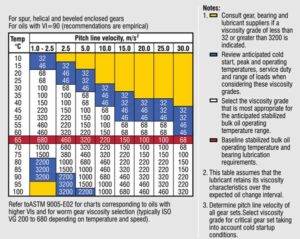
However, viscosity depends on temperature just like ice cream melting on a hot day. Heavy, load good oils are heat or cold stable. The machines have to be able to start up smoothly at low temperatures and endure high heat without getting hot.
Look at the ISO grades that are good for your climate and the type of your machine stable oils that lessen leaks, emit less energy, and protect seals and bearings thus facilitating the maintenance process.
EP Additives and Wear Control
Enter the heroes: Extreme Pressure (EP) additives. These bad boys react at high-pressure points, forming a thin shield on gear teeth to stop weld marks, galling, and pitting. High-load gearboxes crave this support—without it, surfaces break down faster than a cheap umbrella in a storm.
Look for modern additive systems that maintain performance over long hours. They ensure smoother running, lower noise, and top-notch wear control. For gear oil specs in high torque machines, EP oils are non-negotiable.
Rust and Oxidation Resistance
Moisture sneaks in like an uninvited guest—via air, cleaning, or leaky seals. Your oil must fight rust like a knight in shining armor. Oxidation? That’s the villain in heat, weakening oil and turning it useless.
Premium oils slow oxidation, keeping surfaces safe and extending drain life. Rust control keeps bearings and gears spotless, reducing unplanned changes and failures. Together, they make EP oils for industrial systems a smart pick.
Matching Oil Type to Gearbox Design
Not all gearboxes are created equal—different designs mean different lube needs. Worm gears crave oils with friction modifiers to handle sliding action. Helical gears demand strong film and EP support for rolling contact. Bevel gears? They need shock-resistant formulas for angled motions.
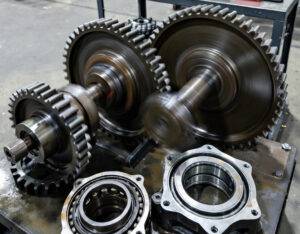
Splash systems vs. pumped circulation? That changes flow and load-carrying requirements. Enclosed setups need good demulsibility to separate water; open ones want tacky oils for stickiness.
Suppliers, review design, speed, load, and material compatibility. Bronze gears? Avoid harsh additives that could eat them alive. Always peek at the OEM manual for viscosity and additive specs—a trusted distributor can match brands without voiding warranties.
Industry Standards and Approvals
Don’t wing it—stick to standards for predictable quality. Bodies like ISO, AGMA, and DIN set the bar for performance, viscosity, and protection.
Maintenance Practices That Protect Gears
Even the fanciest oil flops without TLC. Regular sampling checks condition, contamination, and additives. Change filters to banish dirt, use breathers to block moisture—simple steps, massive savings.
Maintain oil levels: Too low? Film strength tanks. Too high? Foaming ensues. Routine checks spot leaks; avoid mixing grades. Intervals depend on duty—hot, dirty spots need frequent monitoring via color, smell, or particle counts.
Additional Insights: Mineral vs. Synthetic, Load Profiles, and More
Since we are discussing, let us compare mineral and synthetic as well. Minerals are kind to the pocket in moderately loaded applications while synthetics take the lead in extremes with a longer lifespan, better heat resistance, and higher efficiency. They lower the cost per hour in the case of 24/7 operations.
Load profiles? Continuous requires stable viscosity; shocks EP with FZG stage 12+.
The environment matters: Dusty locations require contamination resistance, hot ones oxidation stability.
Most common errors? Price, shopping, OEMs neglecting, no compatibility checkingby avoiding them you will not have to worry about pitting or leaks.
Conclusion:
Selecting Oils That Support Peak Output
Gear oil choice impacts uptime, noise, costs, and safety. For high-load gearboxes, nail viscosity, additives, and stability. Match to design, lean on standards, and maintain diligently.
Distributors, tailor recommendations; users, consult pros. A smart strategy protects assets and boosts business. Thoughtful selection means cooler runs, less wear, and smooth sailing—your machinery (and bottom line) will thank you.
FAQs
What is the best oil for heavy load gearboxes?
It depends on your setup, but look for EP-additive synthetics with high viscosity (ISO VG 460-680) for slow, heavy duties. Always check OEM specs.
How do I choose heavy duty gear lubricants?
Evaluate load, temperature, gear type, and standards like AGMA or ISO. Synthetics for extremes, minerals for basics.
What are gear oil specs for high torque machines?
Aim for AGMA EP grades, FZG load stage 12+, and ISO CKC/CKD categories for EP protection.
Are EP oils suitable for all industrial systems?
Mostly yes for high loads, but check compatibility with worm gears or bronze components—they might need milder formulas.
How often should I change gear oil in high-load applications?
Every 2,000-4,000 hours for minerals, longer for synthetics. Monitor via analysis for accuracy.