Why Use HPCL Enklo Hydraulic Oils For Steel Plants And Manufacturing Units
Proper gear oil selection and maintenance is one of the simplest preventive measures that is most neglected. Industrial facilities are losing millions every year due to premature equipment failure.
Lubrication-related issues, contamination, and severe wear accounted for more than 80% of the causes of gearbox failures. These are failures that can be avoided by using and checking the right gear oil.
Source: Machinery Lubrication Journal
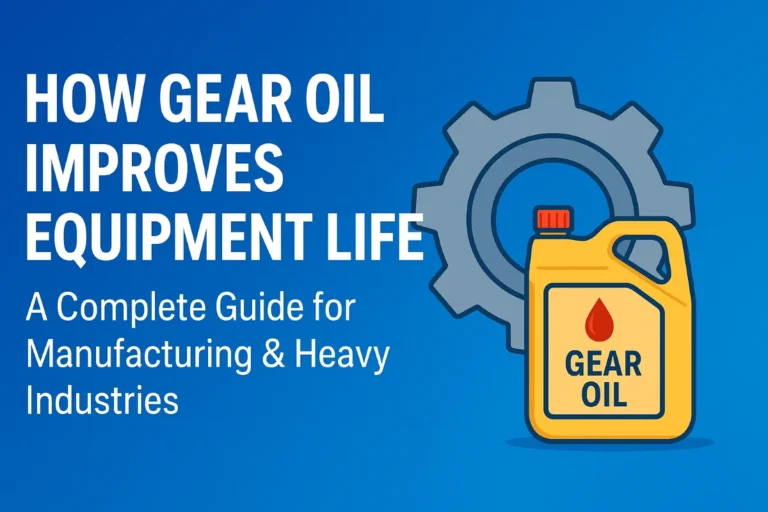
Knowing how gear oil affects equipment longevity is the first step to survival in the modern manufacturing world where efficiency, uptime, and reliability are the main drivers of profitability.
This detailed manual goes over the mechanisms of industrial gear oils, their importance, how they can extend the life of the equipment, and how factories can deploy best-practice lubrication programs to lower downtime and save money.
The Importance of Gear Oil: The Main Element of Equipment Reliability
Industrial gearboxes work under very high pressure, heat, heavy load, and are, at the same time, contaminated. Gear oil is the main defense, it goes far beyond simply lubricating the parts.
The main functions of gear oil are:
Friction reduction between moving components
Heat absorption and dissipation
Shock load cushioning
Contamination control
Wear, rust, and corrosion protection
Smooth power transmission
Good quality gear oil is capable of prolonging the life of the equipment 2–5 times as compared to low-quality or worn-out lubricants.
Source: Noria Corporation
How Industrial Gear Oil Can Help to Avoid the Damage of the Equipment
Here are the major protective actions that are directly responsible for the prolonged life:
-
Formation of Protective Films
The teeth of the gears are the parts that most of the time are under very high-pressure. Friction, if there is no lubrication, leads to rapid scoring and pitting.
Gear oil forms:
Hydrodynamic films at high speeds
Boundary films during start/stop
EP (Extreme Pressure) films during heavy load
These layers keep the surfaces apart thus they do not rub against each other, which in effect drastically lowers mechanical wear.
-
Temperature Regulation & Heat Dissipation
High-temperature operations shorten the lifespan of the metal as well as the oil. The thermal management properties of gear oil:
Are taking the heat away from the metal surfaces
Stopping the formation of the hotspots
Cutting down the rate of oxidation
Helping to maintain a steady viscosity
Lubricant lifespan can be reduced by 50% if the gearbox is running 10°C hotter
Source: ExxonMobil Lubricants Technical Guide
-
Shock Load Absorption
For instance, steel, mining, textile, and heavy manufacturing industries, gearboxes are scenarios where sudden load fluctuations are common. A gear oil is like a hydraulic buffer that:
Shares the impact loads
Hushes the vibration
Gives the joints and the teeth a rest from fatigue
-
Contamination Management
Industries are full of the likes of dust, water, metal shavings, and chemicals. To deal with this situation, a gear oil does the following actions:
It keeps the particles in suspension
Prevents the rusting
Eases the filtration
Makes sure the metal surfaces are safe from the acidic attack
If not for contamination, lubrication-related failures would have been the only 70–80% of the cases.
Source: SKF Maintenance Handbook
➡️ Lube Tradeways offers oil contamination solutions
Industrial Gear Oil: Types and Their Best Use
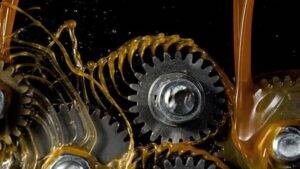
Applications may vary and so should the lubricants. Using the wrong oil is one of the largest causes of premature equipment wear.
-
Mineral Gear Oils
Most suitable for:
Low/medium-load gearboxes
Standard industrial machinery
Where the temperature is constant
Cheap but not very efficient in:
Oxidation resistance
High-temperature operation
➡️ Explore standard industrial lubricants at Lube Tradeways
-
Synthetic Gear Oils (PAO / PAG)
Great for compact, high-speed, and modern kind of equipment.
Good points:
2–4 times the duration of the service period
Carrying capacity of the load is higher
Excellent resistance to oxidation
Better fluidity at low temperature
Very good thermal stability
Some of the major users are:
Steel plants
Cement plants
Precision gearboxes
High-temperature continuous operations
➡️ HPCL ParaSyn Synthetic Gear Oils at Lube Tradeways
3. EP (Extreme Pressure) Gear Oils
Use sulphur-phosphorus additives for severe sliding contact. They are perfect for:
Worm gears
Hypoid gears
Heavy-loading machinery
Automotive differentials
➡️ HPCL EP Gear Oils available here
-
Food-Grade Gear Oils (NSF H1)
Used in:
Pharma
Food processing
Packaging
Beverages
These oils correspond to the highest food safety standards and have excellent resistance to contamination.
Reference: NSF Certified Food-Grade Lubricants
➡️ Contact Lube Tradeways for NSF approved lubricants
Key Protection Mechanisms That Extend Equipment Life
Gear oil is the main component that keeps the machinery safe through several advanced additive functions:
-
Extreme Pressure (EP) Additives
-
Oxidation Inhibitors
-
Corrosion & Rust Inhibitors
-
Anti-Wear Agents
-
Anti-Foam Agents
➡️ Learn more about additives through Lube Tradeways expertise:
Factors That Reduce Gear Oil Life (and How to Avoid Them)
1. Temperature – How Heat Reduces Gear Oil Life
High operating temperatures accelerate oxidation, thinning the oil and weakening its protective film. Excess heat leads to sludge, varnish buildup, and premature gear failure. Maintaining proper cooling, using heat-resistant lubricants, and monitoring temperature helps maximise gear oil service life.
2. Contamination – The Silent Gear Oil Killer
Dust, moisture, metal particles, and process contaminants rapidly degrade lubricant performance. Contamination increases wear, corrosion, and viscosity breakdown. Installing filters, seals, breathers, and conducting regular oil analysis keeps gear oil clean and extends equipment reliability.
3. Duty Cycle & Load Variations – When Stress Accelerates Oil Breakdown
Frequent load fluctuations, shock loading, and high torque operations push gear oil beyond its designed limits. This accelerates additive depletion and film fatigue. Selecting high-performance EP gear oils and matching viscosity with load requirements prevents premature failure.
4. Environment – External Conditions Affect Gear Oil Life
Harsh industrial environments — humidity, dust, chemicals, and outdoor exposure — speed up oxidation and contamination. Proper storage, sealed lubrication systems, and condition-based maintenance protect gear oil from environmental impact.
Best Top 10 Lubricant Companies in India: 2025 Guide for Heavy Machinery Owners
India’s lubricant sector continues to grow, with leading brands supplying high-performance gear oils engineered for steel plants, OEMs, construction fleets, and manufacturing operations. This expert guide lists the Top 10 Lubricant Companies in India for 2025, helping plant engineers, industrial buyers, and fleet owners choose trusted suppliers for reliability, efficiency, and long-term machinery protection.
Source: Noria Research
Best Practices of Maintenance
Condition-Based Monitoring (CBM)
Contamination Control
Temperature Control
Proper Storage & Handling
Reference: ISO.org
➡️ Get preventive maintenance support at Lube Tradeways
Economic Impact of Using the Right Gear Oil
Saving money is not only the result of less oil consumption, but it is also due to:
✔ Lower Downtime — More Hours of Actual Production
When machines stay properly lubricated, they don’t stop unexpectedly.
Instead of operators running from one emergency shutdown to another, production keeps flowing smoothly.
Every extra hour of uptime is extra output — and that directly improves profitability.
✔ Fewer Breakdowns — Less Stress on People and Processes
Breakdowns don’t just damage machinery; they disrupt shifts, delay deliveries, and increase overtime pressure.
When lubrication systems are clean and reliable, components run under less friction and heat — meaning fewer surprises on the shop floor.
This reduces repair requests, emergency callouts, and costly service interruptions.
✔ Longer Equipment Life — Your Assets Work for You Longer
Replacing gearboxes, bearings, and drives is expensive.
Consistent lubrication protects these parts from metal-to-metal wear, corrosion, and heat fatigue.
This extends machine life, allowing organisations to get more value out of their capital investments before replacements are needed.
✔ Extended Service Intervals — Less Maintenance Effort and Cost
When oil stays cleaner and more stable, it doesn’t need to be changed as often.
Technicians spend less time draining, filling, and scheduling shutdowns — freeing resources for other critical activities.
This also means lower disposal and procurement cost over time.
✔ Reduced Spare Parts Consumption — Less Inventory Weight on Your Budget
Good lubrication prevents premature wear on gears, bearings, seals, and shafts.
Plants don’t need to keep piles of backup parts or order urgent replacements when something fails.
This not only saves money but also prevents long waiting periods due to supply chain delays.
Conclusion:
Industrial gear oil is one of the main factors contributing to operational reliability.
If the selection is right and the maintenance is consistent, it should:
Extend asset life by 2–5X
Decrease the breakdown rates by as much as 80%
Reduce operating costs substantially
➡️ Visit Lube Tradeways — HPCL Industrial Lubricants Distributor
https://lubetradeways.com
Partner with Lube Tradeways for Expert Oil Solutions
Being an authorized HPCL Industrial Lubricants Distributor in the North of India, Lube Tradeways is providing:
HPCL ParaSyn Gear Oils (synthetic)
HPCL EP Gear Oils
HPCL Gear Drive Oils
HPCL R&O Oils
Along with the material, we offer:
✔ Technical guidance
✔ Oil selection support
✔ On-site lubrication audits
✔ Reliable supply
✔ Preventive maintenance solutions
📞 Call Lube Tradeways
https://lubetradeways.com/contact-hpcl-lubricants-distributor/