
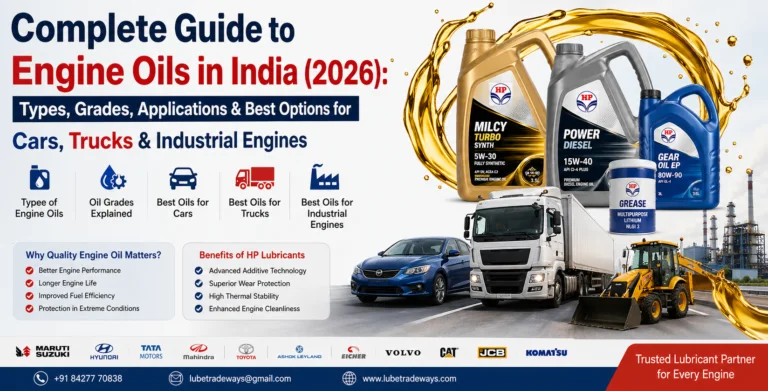
There is no surprises here, Indian roads in 2026 will not only test the oils, in dust, under the hot sun and on badly surfaced roads (Indian roads are rutted, scarred, ‘pillared’ etc.) the oils will be pushed with every km. Generic mineral oils will be greeting an old car with 5000km on the clock and not more. Semi-synthetics will be topping up the more budget inclined customers car that would be doing 5000km or so per visit. Fully sinthetics will be crusing the roads and working beneath the car where heat and mild stresses are involved, with 10000-15000Km (with considerably less stress on the fuel) not uncommon. For City use, 5W30 or 5W40 will help reduce cold start delays and keep your engine cooler at higher ambient road temps. A 15W40 (API CK-4) is ideal for trucks and large diesel engined vehicles, although many OEMs will opt for a thicker ISO VG oil. Castrol Magnatec/Edge 5W30 should be a good bet for your sedan, Shell Rotella T6(1) and mobil Delvac will be the big guns.
Introduction to Engine Oils in India
Importance of Engine Oil for Vehicles
Engine oil is the heartbeat of every vehicle you find on Indian roads and 2026 is more critical for engine oil than ever before. Because engine oil is the silent protector of your engine against the extreme Indian conditions such as scorching 45 C summers, dusty highways, monsoon floods and traffic snarl-offs.
Without the right engine oil, metal against metal can spell doom for your engine in just a few months. A good engine oil will perform four basic functionslubricates moving engine parts to prevent friction, keeps the engine cool by carrying the heat away, removes internal sludge & deposits, and forms a seal over micro gaps to keep the compression tight.
As a result, you getimproved fuel economy (up to 5-8%) saving, BS-VI emission reduction, smooth engine operation & high mileage of the engine. Drive a mini hatchback, a trending SUV or a commercial powerhousepostpone oil changes at your perilit will be the fastest way you bring the engine to a halt. Basically, all we are saying is that purchasing the best engine oil in India 2026 is not just maintenance it’s also smart ownership, which will surely save your pocket and make your vehicle reliable for years to come.
Growth of the Indian Lubricants Market
The Indian market for lubricants is experiencing extremely fast growth rate and is forecasted to touch the figure of 45,000 crore mark in 2026, which makes it one of the fastest growing lubricant markets across the globe. Increased vehicle population, fast pace of industrialization and enhanced emission standards are the significant factors that have contributed to this growth.
Each year more than 30 million new vehicles hit Indian roads, resulting in an unprecedented growth in demand for premium quality engine oils, gear oils and transmission fluids. The passengercar segment, twowheeler segment and commercial vehicle segment are largely contributing to the aforesaid growth, which industrial lubricants segment in India is witnessing a highest growth because of a significant rise in manufacturing, construction & infrastructure projects under schemes likeMake in India, PM Gati Shakti.
However the trend towards fully synthetic and semi synthetic motor oils is rapidly emerging as Indian consumers become more aware of engine protection, fuel economy and longer drain periods. Companies such as Castrol Shell Mobil, HP and Gulf are significantly improving and expanding their range of premium oils.
This huge expansion of our booming lubricants market is a clear proof of the growing references made to the technical performances of Indian vehicles as well as to consumer’s rising expectations, a growing awareness that low prices are not enough to satisfy anymore.
Types of Engine Oils Explained
The vehicle owner in India 2026 must know about the three main types of engine oil in order to select the best one for his vehicle. All three types differ in composition, performance and price and are relevant for a different set of engines and driving conditions.
Mineral Engine Oil: What It Is and When to Use It in 2026
Mineral engine oil is still one of the most preferred and cost-efficient engine oils in the Indian market even in 2026. It is an engine oil that is made directly from refined crude petroleum is the simplest of all the engine oils today.
This conventional engine oil relies on natural hydrocarbons and general additive packages to deliver the right level of lubrication, cooling and protection to use in an aged vehicle. It performs satisfactorily under normal driving conditions and among the vehicles which most commonly use it are older cars motorcycles tractors, and light commercial vehicles with relatively low-mileage usage.
In Indian conditions, mineral engine oil is more suitable for petrol- or early BS-IV diesel-powered vehicles made before 20152016. Due to inferior heat-resistant characteristics, it will oxidize and become thick more rapidly under the intense summer sun and dusty conditions, and this is why the majority of manufacturers suggest shorter oil change schedules and it would be normally between 5,000 and 6,000 km or every 6 months whichever is earlier. The primary benefit of mineral engine oil is cost.
This is because it is quite a lot cheaper than both semi synthetic and fully synthetic options, and it is certainly by far the most affordable option available for drivers that use inexpensive fuel, and therefore gently use and look after their engine. It provides little protection from sludge and high temperature breakdown vis–vis synthetics though.
For owners of older cars, running straightforward engine technology and seeking to keep expenditure to a minimum mineral engine oil remains a viable option in 2026, as long as service schedules are strictly adhered to.
Synthetic Engine Oil: The Premium Choice for Modern Indian Vehicles in 2026
Synthetic engine oil is considered the best engine oil in India for 2026 for the modern Cars, SUVs and High Performance engines. Unlike mineral oil, it is chemically synthesized in labs with premium base stocks & High Performance Additives. This imparts the quality to the oil which mineral & semi-synthetic oils can never achieve.
Fully synthetic engine oil performs exceptionally well in high stress/high temperature situations. Whether it’s the scorching 45 C+ Delhi summers, muggy Mumbai monsoons or extensive Dubai @ 200 km/hr+ high journeys, fully synthetic engine oils perform admirably well in high stress/high temperature environments.
It performs better high temperature thermal stability, oxidation & thermal breakdown resistance, viscosity stability and very high degree of internal & engine protection. Fuel economy increases & engine internals are free of large quantities of sludge. The majority of new BS-VI petrol or diesel cars, in particular those with turbocharging, direct injection or stop-start devices are fully synthetic in the engine oil. Readily available viscosities such as 5W-30 and 5W-40 provide speedy cold-starts in the winter months and an excellent level of high temperature engine protection.
All synthetic engine oil is more expensive initially over traditional mineral oils; however by extending the drain interval (10,00015,000 km). The reduced maintenance cycle results in significant long-term savings over conventional motor oils as well as the welfare of a healthy engine.
Amongst the most popular global brands in India are Castrol Edge, Mobil 1, Shell Helix Ultra and Motul.
Semi-Synthetic Engine Oil: The Smart Balance for Most Indian Drivers in 2026
Semi-synthetic engine oil (also called synthetic blend oil) remains the most popular type of engine oil among millions of vehicle owners in India in 2018. It provides the optimum combination between cheap mineral oil and highly expensive synthetic engine oil.
Semi-synthetic engine oil is an oil made by combining premium mineral base oil with synthesised base stocks and appropriate additivessemi-synthetics outperform normal mineral based oils yet are less expensive than fully synthesised oils. It offers greater stability to heat and oxidation, offers less engine wear and provides enhanced cleaning abilities.
In many difficult operating conditions of the sub- continentmiserably hot climate, traffic-choked roads, and powdersmog-filled airsemi-synthetic engine oil continues to give excellent performance in almost every passenger car, SUV, and two wheeler manufactured from 2015 onwards. It is perfect for everyday city drivers with odd treks on highways.
The car manufacturers specify oil change period of 7,000-10,000 km with semi-synthetic grades. These common viscosities (eg 10W-30, 10W-40 and 5W-30) are widely available from leading brands such as Castrol Magnatec, Shell Helix HX7, HP Extra, Valvoline SynPower and Gulf Pride.
For the typical Indian car or bike owner who is seeking enhanced engine protection, smoothness, and efficiency but not interested in shelling out the comparatively exorbitant cost of a fully synthetic lubricant, semi-synthetic engine oil represents the perfect compromise of performance, protection, and cost-efficiency 2026. It provides some clear improvements over cheaper mineral oils without forcing you to start spending on high maintenance costs.
High-Mileage Engine Oil: Best Solution for Older Cars in India 2026
High-Mileage Engine Oil is a special formulation meant for cars that have traveled 100,000 km or more. As engines age seals dry out and go brittle, gaps in the piston rings get larger, and oil companies tend to use more often; all of which regular engine oils don’t tend to take care of.
This is where high-mileage engine oil. These oils supply additional seal conditioners, viscosity change agents and wear protection additive packages that help rejuvenate clogged up engine seals, minimize oil leaks and burning of the oil.
They help maintain the right engine oil pressure and smoke out emissions, which are quite common with most old Indian cars and SUVs operating in extreme conditions. High mileage engine oils will be available in high mileage semi synthetic & full synthetic category by 2026, hence increasing the choice of oil specifications, with 10W-30, 10W-40, 5W-30 grades being highly recommended for Maruti Hyundai Honda, Toyota & Mahindra vehicles of high-mileage.
Castrol Magnatec High Mileage, Mobil 1 High Mileage, Valvoline High Mileage, Shell Helix High Mileage are some of the high mileage oils which are doing extremely good performance in Indian conditions. If you notice symptoms such as increased oil consumption, some bluish smoke from the exhaust or a slight reduction in power and performance, then a good high-mileage engine oil may help prolong engine life, reintroduce compression, and restore smmoth running again without costly repairs.
For Indian drivers who want to keep their trusted old cars running reliably for a few more years, high-mileage engine oil is a smart and cost-effective choice in 2026.
Understanding Engine Oil Grades: Viscosity Explained for Indian Drivers 2026

Engine oil grades (or engine viscosity grades) are among the key elements to look at when selecting the best engine oil for your car in India. Often shown on every engine oil bottle are grades like 5W-30, 10W-40, 15W-40 etc. What is written here indicates the flow characteristics of the oil as per varying temperatures.
What this means that first number preceding a “W” (representing for Winter) is actually how thick the oil gets when engine is cold. The smaller the number (eg: 5W) the thinner the oil for a cold start which help to prevent wear and tear for such things as your engines first thing in the morning during the winter hours or in an air-conditioned garage.
The second number is how thick the oil is at the engine’s normal operating temperature. The larger number (eg 40 or 50) the thicker the oil for at the end of the engine’s hot running process. In Indian conditions, 5W-30 and 5W-40 grades are suitable for most current petrol cars and cars as they provide rapid cold-start protection along with high temperature and excellent responsiveness at high RPMs. In case of diesel cars, trucks and previous generations vehicles, 10W-40 and 15W-40 grades are popular to counter the prevailing put under sustained high temperatures and heavy load conditions.
Always use the viscosity grade as specified in the automobile owner manual; otherwise, your vehicle may not function effectively or efficiently, or it could even be damaging. In 2026, the use of advanced BS-VI engines will be seen all over, making the event even more essential.
What Do SAE Ratings Mean? A Simple Guide for Indian Drivers in 2026
The SAE rating system is the most popular method of explaining the viscosity( thickness) and flow of an engine oil. (SAE stands for society of automotive engineers -the world wide standard setting body for motor oils). If you read a pack of engine oil with figures similar to SAE 5W-30 OR SAE 15W-40 these are the SAE ratings. W is for winter. The number preceding the ‘W’ (e.g.
5W or 10W) indicates how easy the oil is to flow when cold. The lower the number, the better the cold-flow properties meaning oil heats the critical engine components more quickly when starting up in winter mornings/Northern India’s cold zones, thus providing less wear. The number on the “W” (30 40 50 etc) tells what the viscosity of the oil is at the operating temperature of the engine.
Higher the number more thick the oil will remain when the engine is operating at its normal temperature range. Given the extremely hot Indian summer with engine temperatures moving over 100 degree C. it is a very valid consideration.
For example:
- 5W-30 flows easily when cold and remains stable when hot – perfect for modern petrol cars.
- 15W-40 is thicker at operating temperature and is widely used in diesel trucks and older vehicles.
In 2026 India when you choosing engine oil it is crucial to select the correct SAE rating, as the right one depends on the conditions and your vehicle that you are using it in. For optimal performance, always use the grade recommended by the vehicle manufacturer, and using a SAE number that is too high or low can cause poor lubrication, consumption and engine wear.
Multi-Grade vs Single-Grade Oils: Which One Should You Choose in India 2026?
In India, you will often see that there are two kinds of engine oils available for purchasemulti-grade oils and single-grade oils. Knowing the two apart will help you purchase the right engine oil. Single-grade oils (e.g. SAE 30 or SAE 40) are oils that have only one grade, and are intended to perform satisfactorily within a narrow temperature window. For instance, an SAE 40 may provide very good lubrication when hot but be excessively thick when cold and hinder starting because the oil cannot flow quickly enough.
This limitation means that single-grade oils are not frequently used in current passenger cars; they are now generally only found in older tractor engines or other stationary engine use. Multi-grade oils are even more flexible and much more popular in 2026. Multi grade engine oils are rated by two viscosities- 10W-40 or 5W-50, etc.
‘W’ indicates easy starting in cold weather. Second number represents high temperature viscoseity for protection. Hence these oils are ideal for extreme Indian weather conditions-even at 45C+ summers and winter mornings below 0C in North India.
For just about every Car, Bike and Truck on Indian roads today, multi grade oils are the way to go. They offer protection all year round, better mileage, simpler cold starts, and increased drain intervals than single grade oils.
The top names such as Castrol Shell Mobil and HP have a variety of top notch multi grade synthetic and semi-synthetic engine oils to offer that meet the BS-VI engine needs of today. To sum up, unless you own a very, very old engine (or industrial application), opting for a decent multi-grade engine oil is the wise and simple choice for 2026 in Indian driving conditions.
Common Engine Oil Grades Used in India in 2026
Various types of engine oil grades are hugely popular for different cars bikes trucks, S.U.Vs etc. due to the variable driving conditions of India. By knowing these common grades, takes you towards best selection! Grade 5W-30 and 5W-40 are most suggested grades for fresh petrol and diesel cars in 2026.
These multi grade synthetic and semi-synthetic oils provide great cold start characteristics and do not thin out even in high summer temperature. An overwhelming number of fresh BS-VI cars manufactured by Maruti Suzuki Hyundai Honda, Toyota and Tata choose grade 5W-30 or 5W-40 considering their high fuel economy and performance.
The 10W-30 and 10W-40 grades are among the most popular oils for mid-range cars, older petrol vehicles and many two wheelers.
15W-40 is still the king in the Diesel truck, bus and heavy commercial vehicles segment. This grade is formulates to withstand the hard load, long hours of duty and severe conditions of highways. Commercially API CK-4 and CI-4 rated 15W-40 oils are high demand (Shell Rotella, Mobil Delvac, HP) to name a few.
For two-wheelers, 10 W-30, and 20 W-40 are used in most bikes and scooters of Hero Honda Bajaj and TVS.
Other new viscosities, such as 0W-20 or 0W-30, are not far behind and gradually making headway into luxury vehicles where the ultra-low viscosity will lead to maximum saving on fuel.
Always read your vehicle owner’s manual and use the grade recommended for your vehicle. In Indian climate usage of the correct grade of engine oil greatly helps smooth running and better mileage and long life of engine.
Engine Oil Standards & Certifications: What Every Indian Car Owner Must Know in 2026
In the Indian market buying engine oil is not an easy task. Apart from the manufacturer brand and the price you need to look for certain standards and certifications written on the bottle of the engine oil.
These stand for the global engine performance standards and the safety of your BS-VI modern engine. The two most important certifications are API (American Petroleum Institute) and ILSAC (International Lubricant Standardization and Approval Committee).
- API SP is the latest standard for petrol engines in 2026. It offers better protection against low-speed pre-ignition (LSPI), improved fuel economy, and superior deposit control compared to older API SN or SM ratings.
- API CK-4 and FA-4 are the current standards for diesel engines, especially in trucks and SUVs. They provide excellent wear protection under high loads and better oxidation resistance.
Passenger vehicles require the ILSAC GF-6A or GF-6B ratings. These will assure the oil performs well with the latest engine designs, including turbocharged, direct injected, and stop-start applications, as well as providing improved fuel economy and emissions.
In India, several of the higher-end oils also carry ACEA (European) approvals such as A5/B5 or C3, which are indicated as being more severe on emission levels and engine cleanliness.
Other important marks are JASO MA2 for motorcycles as well as OEM approvals from top automobile brands like Mercedes BMW Volkswagen and Maruti Suzuki.
Also in 2026, as need, always inspect your engine oil to be sure indicated type with the right API, ILSAC or ACEA reading. It is dangerous to use an oil with expired or incorrect certifications. It may appear to be cleaner and more fresh, but in fact cause power and emission problems and damage in the motor in long run.
API Standards for Engine Oil: Complete Guide for Indian Drivers in 2026
API American Petroleum Institute Still considered the most common and best engine oil certification system in India. The API rating on modern engine oil bottles means everything about the way the oil will follow from corrosion protection to the speed of engine wear protection. For petrol engines API SP is the most recent and refined standard in 2026.
It has an extra degree of protection against low- speed pre-ignition (LSPI). LSPI is typical of modern turbocharged direct-injection engines. API SP also has better fuel economy, fewer deposits and better protection against timing chain wear than previous standards (API SN and SM).
API CK-4 oils are the preferred standard for 4-stroke diesel engines, particularly on trucks and commercial vehicles. It provides excellent protection from wear, oxidation stability and shear stability under heavy load and high temperature operation. Fleet operators in India seem to favor the CK-4 standards compared to old CI-4 or J4 ratings, which makes the oil more capable for long hours on dusty Indian motorways.
Some oils will also note API FA-4. This certification is for newer high-efficiency diesel engines that aim for improved fuel consumption.
All premium fully synthetic, semi-synthetic engine oils available in India from Castrol Shell Mobil HP Valvoline, etc. are available with the latest API SP (petrol) or CK-4 (diesel) classification. Never use the latest API classification rating on your petrol or diesel.
Always see that the API classification qualification is wrong for your vehicle, otherwise performance can be badly affected and wear increased. Checking the API rating is one of the easiest methods of ensuring your vehicle is getting good quality engine oil for 2016.
ACEA Specifications for Engine Oil: What Indian Drivers Need to Know in 2026
API is the most common engine oil standard in India; however, many high-end engine oils also have ACEA (euracy pack with API, is a European standard. ACEA is a standards based on the same parameters as API, but is stricter and more demanding. This is especially the case with modern cars with complex emission systems.
ACEA specifications are divided into three main categories:
- A/B SeriesDesigned for petrol (A) and diesel (B) passenger cars. For the Indian car market, ACEA A5/B5 has a broad acceptance for cars where excellent fuel efficiency and long drain intervals are sought. Good piston cleanliness, protection from wear and low oil consumption are also ensured. C Series – for vehicle equipped with after-treatment device including catalytic converters, DPF (Diesel Particulate Filter).
- ACEA C2, C3 and C5 are all low-SAPS oils (Sulphated Ash Phosphorus Sulphur). These are aimed at BS-VI diesel cars and SUVs to help protect delicate emission systems from carbonising while giving wide engine protection.
- E Series For heavy-duty diesel engines used in trucks and buses. ACEA E6 and E9 ensures outstanding soot handling, longer drain intervals and ultimate protection when subject to severe working conditions.
Several cars including the European ones sold here (Mercedes BMW Audi VW Skoda) will heavily recommend ACEA oils in 2026. Some Indian cars also will recommend ACEA C3 oils for the new vehicles (Tata, Mahindra). Knowing the specification indicated is essential.
For example, ACEA U signifies that the oil will provide better compatibility with BS-VI standards, better high temperature protection and a longer life suited for India’s extreme weather conditions. If your vehicle manual says that your car requires ACEA oil, use it without fail.
Opting for an engine oil with the correct ACEA specification can greatly enhance engine cleanliness, fuel economy and the longevity of costly emission parts.
BIS Standards in India: Why They Matter for Engine Oil in 2026
Bureau of Indian Standards (BIS): Indian Standards Body. The BIS certification label (ISI mark) is among the top quality labels for Indian engine oil consumers in 2026.
The BIS prescribes the mandatory parameters of lubricants as specified in IS 13656:2019 for lubricants in automotive engine oils and IS 14234 for 2 wheelers lubricants. Any engine oil supposed to be using is “ISI Marked” is tested in laboratories under significant parameters related to viscosity, flash point, pour point, oxidation stability, wear protection and corrosion resistance.
In a market saturated with real and fake grades, the BIS ISI sign assures customers that the oil conforms to minimum standards of performance and safety to Indian climatic and road conditions. It is most relevant to mineral and semi-synthetic oils supplied by local and state brands.
Most large Indian oil companies like Hindustan Petroleum (HP), Indian Oil (Servo) and Bharat Petroleum (MAK) prominently display the BIS Mark on most of their products. As well, despite the many private brands and imported brands in the Indian market, this certification is now secured in order to gain credibility.
But what’s worth knowing that BIS just set the basic quality level. premium fully synthetic by Castrol Shell Mobil, and Motul, tend to surpass BIS standards and capitalize more on international standards like API SP, ACEA C3 or OEM approvals. For those who want the reassurance that their cost-conscious buy or their old-horse will be reasonably protected, then a BIS-certified engine oil for the small extra we can currently attain is the ideal choice.
Always in 2026, buy engine oil with the ISI mark and the right API/ACEA rating. This is the best combination of affordability, quality assurance and the right protection for Indian conditions.
Applications of Engine Oils: Choosing the Right Oil for Every Vehicle in India 2026
Engine oils is not a single use product. Its application ranges widely based on vehicles, engine and operating conditions. It is important for Indian market in 2026 to understand the application of every type of engine oil so you can select the right one for long life and smooth operation.
Passenger Cars & SUVs: To meet up with BS-VI requirements, new-generation BS-VI Petrol and diesel vehicles require low viscosity multi grade oils such as 5 W-30 or 5 W-40. Fully synthetic or semi synthetic engine oils are recommended here for optimum economy, cold starts, turbocharger protection.
Popular brands include Castrol Edge and Shell Helix for city cars and long distance cruisers. Two-Wheelers (motorcycles & scooters): motorcycle engines operate at higher temperatures and speeds within the engine; so most require JASO MA2 grade oil of 10 W 30 or 20 W 40 quality. Most motorcycle use same oil for engine as well as wet clutch so proper friction performance is also necessary.
Trucks & Commercial Vehicles: Heavy-duty diesel trucks and buses require heavy 15W-40 oils with the API CK-4 designation. Good soot control, long drain intervals and protection for heavy loads, long idling time and dusty roads are needed.
Agricultural&Construction Equipment: Tractors, harvesters or earthmovers will carry 15W-40 or 20W-40 oils developed for mixed fleets of engine + transmission + hydraulics – these multi-purpose oils reduce service inventories in the developing world. Industrial Engines & Generators: Stationary diesel engines and industrial engines use thicker oils with high thermal stability if they are running all day.
In 2026 India, always useEngine OilApplication should be chosen according toVehicle Type.Driving Pattern.
Manufacturer Recommendations. Choose the correctOil.Application for the correct application, saves maintenance and reduces costs, improving engine life.
Engine Oil for Passenger Cars in India 2026: Complete Guide
Picking the ideal engine oil is among the most crucial decision for Indian consumers to make in 2026 for their passenger cars. With thousands of BS-VI petrol and diesel vehicles plying the roads, using the correct engine oil is vital to ensure optimal efficiency, performance and reliability.
The majority of today’s passenger vehicles – hatchbacks, sedans and SUVs from the likes of Maruti Suzuki Hyundai Honda Tata Toyota and Mahindra – run best on 5W-30 and 5W-40 viscosities.
The multi-grade oils will keep your car well lubricated on cold winter mornings as well as during the hot summer days when the engine runs extremely hot. Pure synthetic “mother-muck” should be used in any newest fresh, petrol turbo, direct-injected motor.
They are designed for the best wear protection, present better economy (up to 5-8%) and can be changed less regularly, (between 10,000 miles and 15,000 km). Tried and true products are Castrol edge 5W-30, Shell helix ultra and the like. Diesel powered passenger cars, compact SUVsbest semi-synthetic or 100% synthetic 5W-40 oils using the API SP or ACEA C3 categories. They addresses the inherent higher soot levels and takes good care of the DPF.
Older passenger vehicles (under 2018) can run without issues on good quality semi-synth 10W 30, 10 W 40 at 7-8 K intervals. In hot operating conditions, small Indian roads and congested traffic roads, following the indicated vehicle got engine oil grade and specification is very much essential.
irregular or use of inferior quality of oil can reduce the mileage, reduce the power output of the vehicle which increases the consumption of precious fuel and attract heavy expenditure on engine repairing.
To get peak performance from your car in 2026 then always look out for your owners manual. When you buy a generic brand always make sure it is the right brand for your style of driving. Long trips or general driving.
Engine Oil for Commercial Trucks & Buses in India 2026: What Fleet Owners Need
Commercial trucks and buses operate under some of the harshest conditions in India long highway runs, heavy loads, high idling, severe heat, dusty roads Making the right choice of engine oil for trucks and buses is thus essential. R. This multi-grade diesel engine oil is especially formulated to cope with high loads, high temperatures and soot accumulating in a diesel engine. The most common grade used in heavy commercial vehicles is 15W-40.
By 2026 the CK-4 rating was the new rating in terms of the new API designation that provides better wear protection, oxidation stability and shear resistance than a CI-4 or CJ-4 rated oil. The fully semi-synthetic, or semi-synthetic, 15W-40 formulations such as Shell Rotella T6, Mobil Delvac 1300 Super, Castrol Vecton, HP Rally, Gulf Fleet Supreme etc.
are most desired by fleet operators. They ensure longer drain intervals (up to 40,00060000 km in some applications with diligent condition monitoring), lower downtime and assist in periodical oil consumptions.
Modern BS-VI trucks and buses with complex emission systems (SCR and DPF) require low-SAPS oils conforming to ACEA E9 or API CK-4 standards to maintain the optimimum performance of the sensitive after-treatment systems.
The use of the correct heavy duty engine oil not only prolongs engine life but it is also more fuel efficient and less costly to maintain, an important consideration for the commercial transport operator.
Inferior oil will cause more wear, Bearing Failure and costly autobreakdowns. By 2026, Efficient fleet operation in India begins with choosing a 15W-40 diesel engine oil of high quality that is recommended by your truck / bus manufacturer, suited to your operating conditions.
Engine Oil for Two-Wheelers in India 2026: Best Choices for Bikes & Scooters
Two wheelers rule Indian roads, and correct engine oil is the key to seamless performance, increased fuel efficiency and better engine life. Since in most of the Indian two wheelers, the single oil is used for engine as well as the wet clutch, correct oil becomes even more important.
Most recommended grades for two wheelers in 2026 is 10W-30 and 20W-40. Multi-grade oils offer very good high-temperature stability and are also suitable for above the city riding conditions.
Be assured to look for JASO MA2 grade Oil, as it is safe for wet-clutches and prevent slippage. Especially for premium bikes like Motorcycle Enfield, Bajaj Dominar KTM Yamaha R15, Fully synthetic or Semi-synthetic 10W-30 and 10W-40 are the best lubricants providing high-end protection during high RPM, diminishing Engine temperature and improving throttle response. They are among best sellers RC series like Castrol Power1, Shell Advance Ultra, Motul 3100 and HP Zoom.
For reliable semi-synthetic 10W-30 JASO MA2 oils Honda Hero TVS, and Suzuki scooters and commuter bikes run best. They deliver good mileage and very clean internals even in prolonged heavy city traffic and in hot weather. Most manufacturers suggest changing the oil every 4,000-6,000 km for scooters and 6,000-8,000 km for motorcycles.
Incorrect oil or poor quality mineral oil may lead to juddering of the clutch, power loss, increased engine noise and shorter wear.
No matter if you are riding an every day commuter scooter or a performance motorcycle in 2026, using a good quality JASO MA2 rated engine oil is one of the easiest ways to maintain your two wheeler over the years.
Engine Oil for Industrial Engines in India 2026: A Complete Guide
Industrial engines such as marine engines, construction equipment, industrial engines, stationary engine, and DG sets are exposed to heavy loads and long running hours. Choosing an engine oil that performs reliably while keeping fuel consumption low is extremely important in 2026. Unlike automotive engines, most industriaal engines operate at a steady maximumrpm [e.g. 2000 rpm], for long period of times [e.g.
17hours], at [roughly]high temperature. Consequently, it is necessary an high-power oils with the following additive requirements: great thermal stability, high combustion stability and very high soot displacements. Most widely used grades for industrial engines are 15W-40, 20W-40 and 40 (some older installations still use monogrades).
For all new DG set engines and heavy duty equipments, either API CK-4/ CI-4 Plus or compatible grade of oils are used. A good number of operators opt for ACEA E7/E9 category oil for better engine protection as well.
In the Indian market the leading oils are Shell rimula, Mobil Delvac, Castrol Vecton, HP Milcy, and Valvoline Premium Blue. These oils are designed to withstand severe pressure, minimize carbon deposits and extend drain intervals, which can be quite long, anywhere from 500-1000 hours of depending on the equipment, oil analysis.
For construction equipment, such as excavators, wheel loaders or cranes, multi-functional oils (UTTO or STOU) protecting transmission, hydraulics and engine all together are more and more used.
In India’s hot and dusty industrial conditions, the use of high performance industrial engine oil can significantly reduce premature wear, bearing failure and overheating. Where appropriate, regular oil analysis (used oil testing) is recommended for large fleets or applications where maximum engine lives are required to keep maintenance costs down.
Like the 500 kVA generator at the factory or the heavy earthmoving equipment on a construction site, the correct industrial engine oil keeps working at peak performance and expenses lower in 2026.
Best Engine Oils in India 2026: Top Picks for Cars, Bikes, Trucks & More
Selected.the best engine oil in India in 2026 is now more straightforward but very crucial as there are dozens of quality products in every budget range. Here are top rated engine oils that are most used by Indian drivers and Fleetowners in 2026.
For Passenger Cars & SUVs, the Castrol Edge 5W-30 (Titanium FST) and the Shell Helix Ultra 5W-30 are still the undisputed advocates for today’s petrol and diesel vehicles. Both provide exceptional performance with enhanced fuel economy and extended drain intervals up to 15000km. The Mobil 1 5W-30 and the Motul 8100 X-cess 5W-40 alsoperform well among motorists.
Two-Wheelers Castrol Power1 10W-30 and Shell Advance AX7 10W-30 have maintained leadership in the Category with a perfect JASO MA2 rating. For high-end bikes, the 3100 Goldfrom Motul and HP Zoom Sport are worthy choices. Among fleet operators for Commercial trucks & buses Shell Rotella T6 15W-40 (fully synthetic) is the most preferred option followed by Mobil Delvac MX Extra 15W-40.
Both these oils provide excellent protection against wear and oil drain intervals. Castrol Vecton 15W-40 and HP Rally 15W-40 are other value-for-money options.
Older & High-Mileage Cars The best in this category for vehicles above 1 lakh km is Castrol Magnatec 10W-40, followed closely by Valvoline High Mileage 10W-40. Affordable choices The semi synthetic HP Extra, MAK Lubricants and Servo Super are suitable for daily driving. So the final question is what is the “best” engine oil to use in 2026?
As previously mentioned this will be decided on your engine type age driving and financial situation. Check what your manufacture recommends and always purchase engine oil with the latest API SP / CK-4 and ACEA specifications.
Remember buying a good quality engine oil will save you money in the long run as it will help improve your mileage, reduce failures and prolong engine life.
Top Engine Oil Brands and Products in India 2026
The 2026 Indian engine oil market (2 wheeler and 4 wheeler) will be led by a number of global players as well as Indian players. Following are the most trusted brands and their brands that Indian vehicle owners and fleet owners prefer: Castrol Remains the most popular among Indian car owners.
Leading products include Castrol Edge 5W-30 (fully synthetic), Castrol Magnatec 10W-40 (stop start traffic), Castrol Power1 10W-30 (for two wheelers) and Castrol Vecton 15W-40 (for trucks). Shell Well established.
Premium quality and technology used. Most common products: Shell Helix Ultra 5W-30/5W-40, Shell Advance AX7 & Ultra. (bikes) and Shell Rotella T6 15W-40 (fully syn.
diesel oil for trucks etc.) Mobil Recommended for superior protection and extended drain ability. Do your bestsellers: mobil 1 5W, 30 for cars; mobil super 3000 10W, 40 for the engine; mobil Delvac MX Extra15W40/ 1300 Super for trucks and buses.
HP (Hindustan Petroleum) The highest selling well known Indian brand. Gives best value for money. Leading products: HP Extra, HP Zoom Sport (bikes), HP Rally (trucks) and HP Milcy for industrial engines.
Other Strong Contenders
- Valvoline: Excellent high-mileage and synthetic oils
- Gulf: Gulf Pride and Gulf Fleet Supreme
- Motul: Preferred by performance bike and car enthusiasts
- HP Lubricants: Trusted industrial and commercial engine oils like Milcy Power, Racer and CRB series, known for durability, performance and wide availability across India, in North India known as Lube Tradeways.
- MAK (BPCL) and Servo (IOC): Reliable and widely available budget options
In 2026, the top 3 premium brands are still: Castrol, Shell and Mobil, and the best value and widely available brands in the mass market and commercial segments are still, among others: HP, Servo and MAK. Start with your engine’s requirements when selecting engine oil, then choose from reputable brands that meet the right viscosity, API/ACEA standards & your budget.
Rest assured that a quality item from any of these leading brands will offer you peace of mind & that you are providing your engine with optimum protection on Indian roads.
Top Engine Oil Brands and Products in India 2026
There are a few major players in the Indian engine oil market 2026, which are (from the quality, performance and availability perspective) bestsellers. This is the list of the best Indian engine oil brands 2026 and their best selling products: Castrol the best freshs in premium segment.
Best seller are Castrol Edge 5W-30fully synthetic for cars & SUVs, Castrol Magnatec 10W-40 stop-start traffic, Castrol Power1 10W-30 two-wheelers, and Castrol Vecton 15W-40 trucks.
Shell Known for innovating in technology and having some of the longest drain intervals for petrol and diesel engines. Quality items such as Shell Helix Ultra 5W-30/5W-40, Shell Advance Ultra & AX7 for bikes, Shell Rotella T6 15W-40 fully synthetic and heavy duty diesel.
Mobil Best protection and fuel economy (oil economy). They are excellent oils especially Mobil 1 5W-30, and very popular, priced well. Their heavier duty oils include: Mobile Super 3000 10W-40 or an off brand 5W-30, and General fuel for the commercial vehicles: Mobil Delvac MX Extra 15W-40.
HP (Hindustan Petroleum) The Indian brand with good value for money and availability. Top models: HP Extra (semi-synthetics for cars); HP Zoom Sport (for 2 wheelers); HP Rally 15 W-40 (trucks) and; HP Milcy (industrial engines).
Other reliable names
- Valvoline: Excellent high-mileage and synthetic range
- Motul: Favourite among performance bike and car enthusiasts
- Gulf: Strong in both passenger and commercial segments
- MAK (BPCL) and Servo (IOC): Trusted budget-friendly options across India
In 2026 Castrol Shell and Mobil lead the premium fully synthetics HP Servo and MAK lead the mass and commercial grades due to price and service network coverage. Always select the brand and product that fits you and your car’s exact specification, operating condition and cost to be most effective.
Budget vs Premium Engine Oil Options in India 2026: Which One Should You Choose?
The biggest hand-wringer Indian vehicle owners will have in 2026 is whether to accept a more affordable engine oil or choose the higher end one. It will be not only a matter of price but also of performance, drain interval and engine life. Budget Engine Oils (400650 a litre) Mainly mineral or good semi-synthetics from HP Extra, Servo Super, MAK and Gulf Pride.
Ideal for older cars, regular drives, and high-mileage use. Offers reasonable protection for a much lower price; shorter drain intervals (in the 5000-8000 km.
range) and slightly increased fuel costs in extreme heat and traffic. Premium Engine Oils (9001,800/lt): Fully synthetic Engine oils like Castrol Edge, Shell Helix Ultra, Mobil 1, Motul 8100 are ranging in this grade. They provide high heat resistance, better wear protection, good cleaning ability and required drain interval of 10,00015,000 km. These oils are most appropriate for new BS-VI cars SUVs turbo engines and high carburized cars which are driven for longer distances in turbulence of Indian conditions.
Quick verdictGo for budget car oils in a less recent model, if the mileage is low; if you want to watch costs then choose a budget oil. Choose premium synthetic engine oil in a newer model, especially if you do high mileages, want to optimize fuel economy and engine life. The extra cost of premium in 2026 often will be repaid in reduced oil changes and better mileage.
Have the right oil in your vehicle for whatever you use it for. Don’t go cheap on the price, buy accordingly.
Important andMost aspects to consider while selecting engine oil in India 2026 The ideal engine oil for your vehicle is determined by the vehicle type age running miles, driving style, climate and manufacturer specs to give you excellent performance and safety. How India’s Climate & Driving Conditions Affect Engine Oil
With the elevated temperature, dust storms, excessive monsoons, and stop-go-movement in 2026 need better in cleaning and thermal stability engine oils.
Engine Oil Change Intervals: Get It Right in 2026
Choosing the right oil change frequency depends on: Oil type, age of vehicle, type of use.
Regular oil changes prevent wear and tear and keep your engine running smoothly.
Mineral oil 5000-6000 km, semi-synthetic 7000-10 000 km and fully synthetic 10 000-15 000 km. Follow manufacturers schedule for optimal efficiency. Clear Signs You Need an Engine Oil Change Now
A dark, sludge like oil, noises of the engine knocking, a decrease in the miles per gallon, burning smell or warning light indicator lights on the dashboard all indicate the need of an oil change.
Benefits of Using the Right Engine Oil in 2026
The right engine oil increases power, enhances engine longevity, gain better mileage, lower emissions and gives long-term value for money in repairs. How the Right Engine Oil Enhances Vehicle Performance
Engine oil of premium quality should be selected for the Indian conditions.
The premium oil can not only reduce friction but also provide acceleration smoothly, more stable power delivery and less noise even in the congested Indian traffic.
A good quality engine oil reduces internal wear, keeps away sludge formation, and safeguards the engine from extremes of heat; which means your engine will live between two to three times longer. Boosting Fuel Efficiency with the Right Engine Oil
Having the right viscosity and synthetic oil will allow less friction to occur which means better generation of combustion and you’ll get 5-8% more mileage on Indian roads in 2026.
Common Mistakes to Avoid with Engine Oil
Wrong grade (SL SN etc.), missed changes, mix of oils or fake products can cost you very expensive engine damage.
These also void your warranty.
Mixing mineral and synthetic oils leads to lubrication problems, sludge build-up and less protection.
Best practice is to stick with one.
Disregarding the recommended grade and specs in your vehicle manual could increase wear and tear, impair performance or even result in the loss of warranty.
Environmental Impact of Engine Oils in India
Used engine oil is a dangerous waste. When disposed of improperly it depresses ecosystems between the earth and waters.
In 2026, care in its use and disposal is necessary.
The obsolete vehicle can be collected so as to check for treating and recycling so that it will not pollute groundwater.
Free collection are possible in almost all approved service stations in India.
Bio-based and low-SAPS synthetic oils provide lower emissions and reduced impact on the environment while guaranteeing very high standards of protection and performance for engine.