
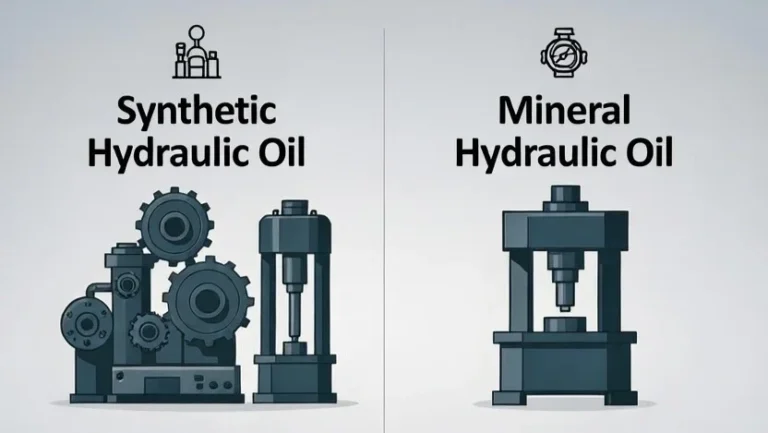
Synthetic vs Mineral Hydraulic Oil
There is a crucial choice that Indian manufacturers and maintenance engineers must make when it comes to hydraulic oil: synthetic vs mineral hydraulic oil. Choosing the wrong one would result in shutting down of equipment, losing money on maintenance, and a decrease in the lifespan of machines due to the harsh industrial environment of India.
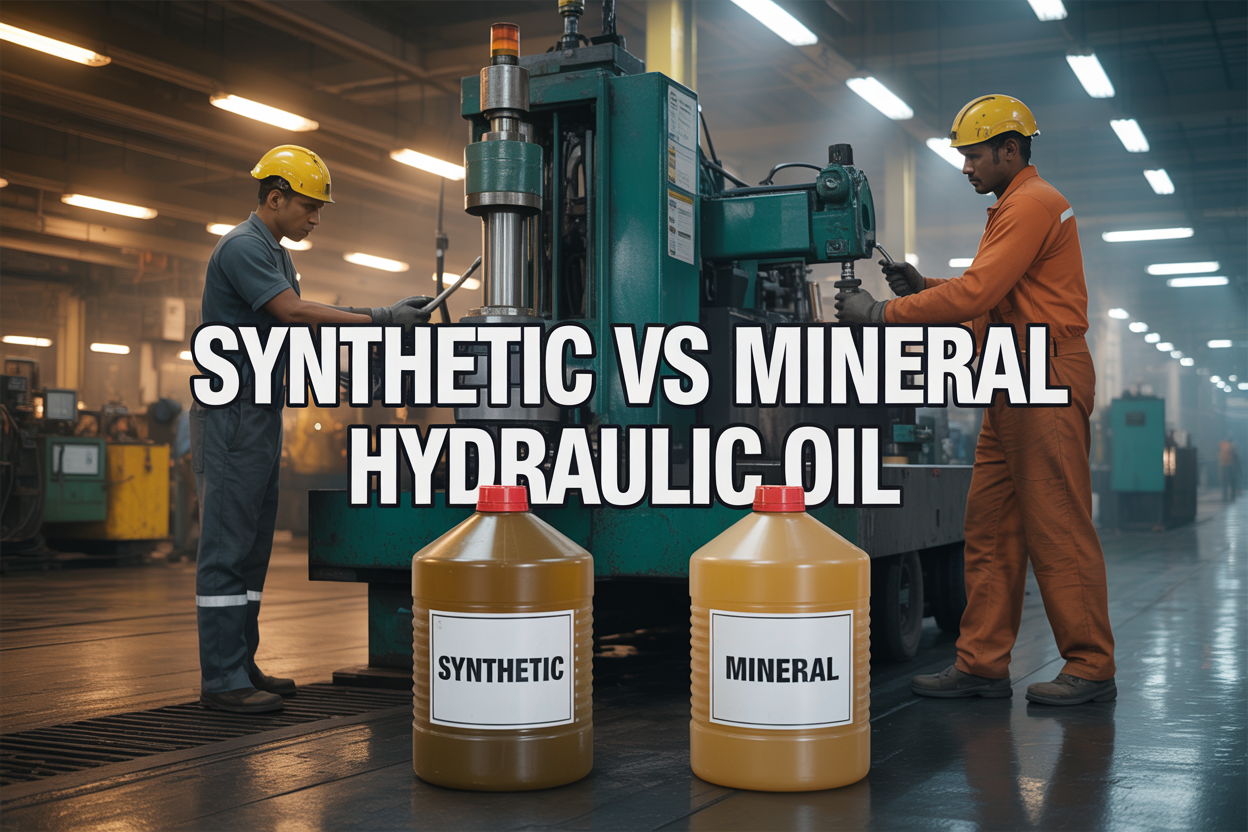
This article is designed to familiarize plant managers, maintenance teams, and procurement professionals in Indian manufacturing with the kind of hydraulic oil that is more economical in terms of their day, to, day operations. We will discuss the performance differences between synthetic and mineral oils under extreme conditions of heat and dust in India. Furthermore, we will carry out a cost, benefit analysis to consider the aspects of purchase price, maintenance intervals, and equipment protection along with the total cost of ownership. In addition, you will learn what disruption in machine life each oil type causes and which sectors derive most of the benefit from synthetic as well as mineral hydraulic fluids.
Understanding Hydraulic Oil Types and Their Core Differences
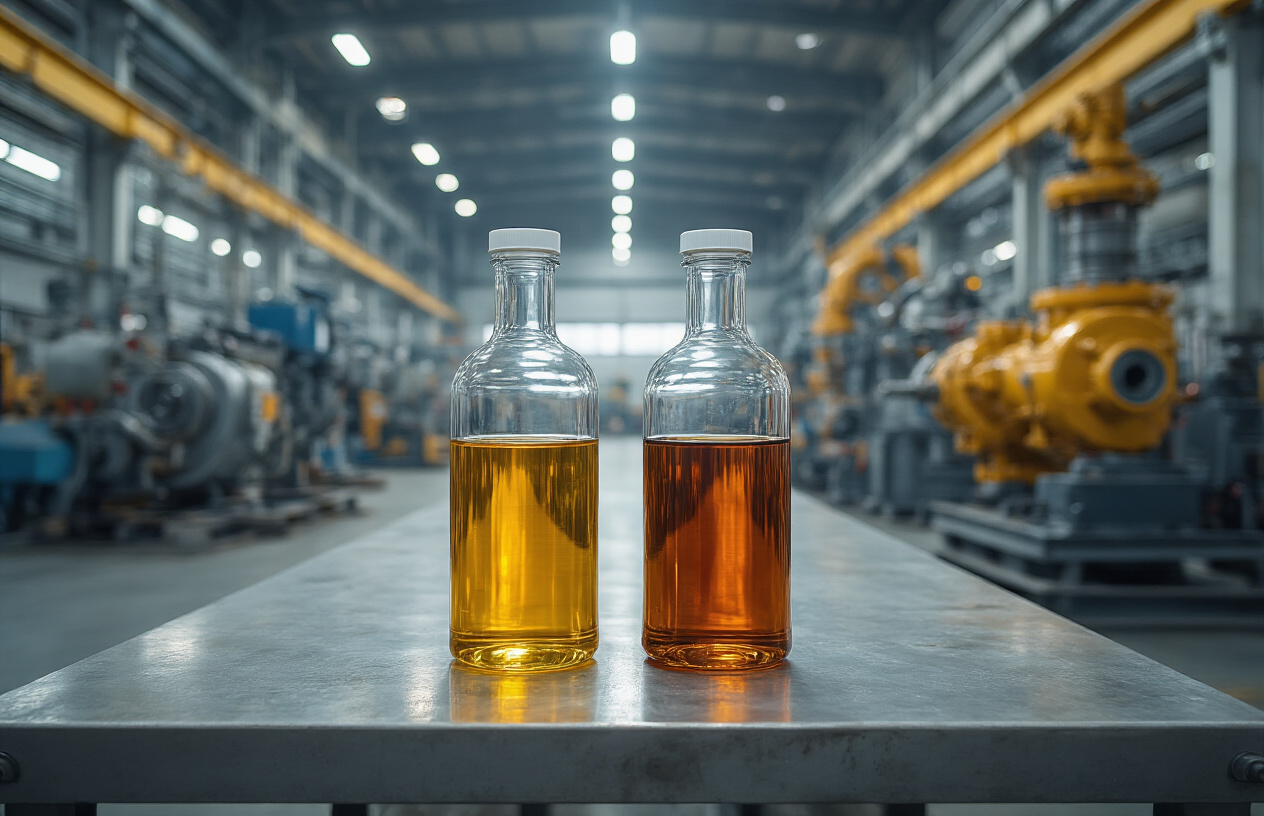
What Makes Synthetic Hydraulic Oil Unique
Contrary to synthetic hydraulic oils that are derived from crude oil, synthetic hydraulic oils are chemically engineered fluids made via strictly regulated chemical processes. These lab, made lubricants have highly precise molecular structures that guarantee reliable performance under diverse operating conditions.
The initial step in the production process is the synthesis of base chemicals to create molecules with specific features. Numerous contaminants and undesirable substances present in conventional oils are removed by this controlled method. The end product is a fluid with improved stability and a uniform molecular weight distribution.
Among the main benefits of synthetic hydraulic oils are:
Resilience to temperature: Preserves viscosity stability between -40°C and 200°C
Longer service life: Prevents oxidation and thermal deterioration
Improved lubricity: Moving parts are protected by superior film strength
Improved water separation and corrosion prevention due to moisture resistance
Decreased upkeep: Greater time between oil changes
Key Characteristics of Mineral Hydraulic Oil
The conventional option for industrial hydraulic systems is mineral hydraulic oils. These oils, which are obtained from petroleum crude oil through refining procedures, go through solvent extraction, distillation, and additive treatment to satisfy performance requirements.
Beneficial hydrocarbon chains are preserved while waxes, aromatics, and other unwanted substances are eliminated during the refining process. To improve their inherent qualities, modern mineral oils are given carefully calibrated additive packages.
Principal traits consist of:
Cost-effectiveness: A lower starting price
Broad availability: Easily reachable throughout India
Decades of successful industrial use attest to its dependability.
Compatibility with additives: Compatible with different performance enhancers
Standard viscosity grades: widely accessible ISO 32, 46, and 68 options
| Property | Mineral Oil | Synthetic Oil |
|---|---|---|
| Base Material | Petroleum crude | Synthesized chemicals |
| Molecular Structure | Variable | Uniform |
| Temperature Range | -20°C to 100°C | -40°C to 200°C |
| Service Life | 1,000-2,000 hours | 3,000-8,000 hours |
Chemical Composition Impact on Industrial Performance
The behavior of hydraulic oils in industrial operating conditions is their molecular makeup directly defining factor. Mineral oils can contain a variety of molecules differing significantly in terms of the number of carbon atoms and the presence of branches. This diversity in components of a mineral oil could lead to less reliable performance since different components degrade at different rates.
Synthetic oil molecules are purposely designed to achieve a set of performance characteristics. Their single, phase nature makes them consistent and predictable in their behavior under any operating pressure and temperature. This kind of uniformity in hydraulic system performance contributes to the overall reliability.
Many key performance areas are influenced by chemical stability:
Viscosity Index: Synthetic oil features almost the same viscosity over a temperature range, whereas mineral oil shows more drastic changes in viscosity with temperature variation. The higher viscosity index suggests better cold start and running temperature performance.
Oxidation Resistance: Synthetic oil is less prone to oxidation as compared to mineral oil. This means the oil can perform its functions better by oil thickening reducing, acid formation inhibiting and deposit, thus damaging hydraulic equipment, by giving the oil a chance to be maintained.
Hydrolytic Stability: Both oils can be contaminated by water but synthetic oil performs better under water exposure conditions. In fact, it is very important to Indian weather conditions because of very high humidity.
Additive Response: The type of undermineral base oil influences the additive efficiency drastically. A synthetic oil base usually allows the additives better solubility and stability, thus enhancing the performance of the additives.
Performance Analysis Under Indian Industrial Conditions
High Temperature Resistance in Hot Climate Operations
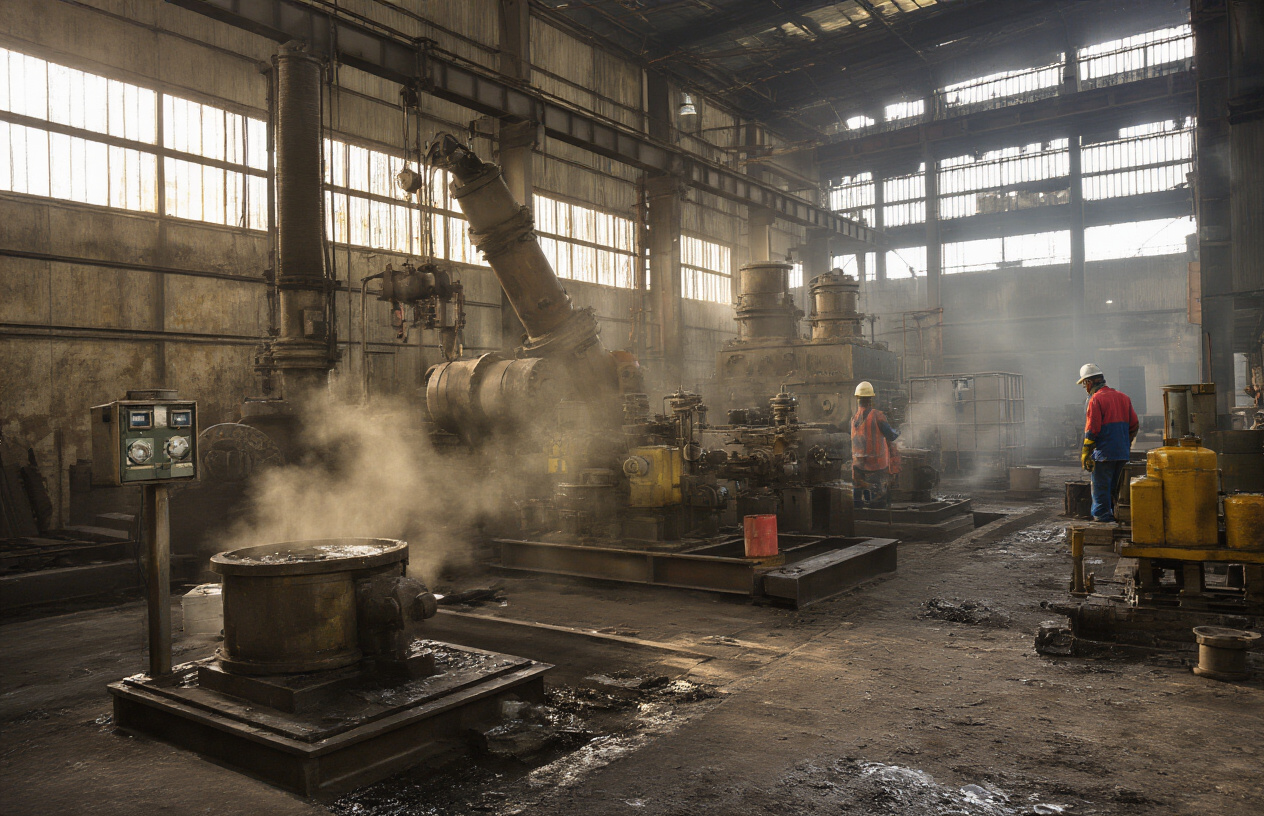
India’s industrial environment is quite challenging as the ambient temperatures frequently go beyond 45C, thus heating the hydraulic systems till their thermal limits. In such extreme conditions, synthetic hydraulic oils show remarkably good performance as they retain their viscosity index ratings even at the operating temperatures of 80, 100C. This feature of synthetic oils inhibits the thinning of the oil which is a common problem with mineral oils that in continuous heat conditions can lose up to 30% of their protective properties.
Mineral hydraulic oils start to undergo chemical decomposition at around 60C with the result that deposits are formed which clog filters and thus lead to inefficiency of the system. Manufacturing plants located in the states of Gujarat and Rajasthan have experienced up to 40% longer intervals between maintenance when they have switched to the use of synthetics during the hottest months of summer. The resistance of synthetic oils to thermal degradation is the reason why there are fewer production stoppages and less risk of the occurrence of a disastrous hydraulic failure when the operations are critical.
Heat dissipation capabilities also differ dramatically between the two types of oil. The synthetic blends are more efficient at heat transfer, thus reducing the temperature of hydraulic pumps and motors significantly even during long working hours. This features is extremely helpful for textile mills, steel plants, and automobile factories that are working in multiple shifts under the harsh climate conditions of India.
Load-Bearing Capacity for Heavy Machinery Applications
Heavy industrial machinery requires hydraulic oils that can keep their lubricating film strength at the very time of exposure to extreme pressure conditions. Synthetic hydraulic oils are very efficient in high, pressure applications that go beyond 350 bars, a situation commonly found in CNC machines, hydraulic presses, and injection molding equipment, which are prevalent in Indian manufacturing.
The molecular structure of synthetic oil results in superior load, bearing properties when compared to mineral oil alternatives. Mineral oils may have their films broken down when subjected to pressures exceeding 250 bars, but synthetic formulations continue to provide a protective layer, thus avoiding direct metal, to, metal contact which causes component wear and leads to expensive repairs.
| Pressure Range | Synthetic Oil Performance | Mineral Oil Performance |
|---|---|---|
| 100-200 bar | Excellent film strength | Good performance |
| 200-300 bar | Consistent protection | Variable performance |
| 300+ bar | Superior load bearing | Film breakdown risk |
Indian heavy machinery operators have disclosed that there was a 60% decrease in pump wear when they started using synthetic oils in high, pressure applications. Construction equipment, mining machinery, and large, scale manufacturing presses are the major users of synthetic oils, and hence the performance of these machines is significantly enhanced as the synthetic oils can endure shock loads and pressure spikes without the system getting compromised.
Filtration Efficiency and System Cleanliness Benefits
Hydraulic systems running in India’s industrial environment face a big challenge from dust and contamination. Synthetic hydraulic oils, being at the start from a cleaner base, contain fewer impurities from the manufacturing process as compared to refined mineral oils that may still hold some trace contaminants.
The chemical make, up of synthetic oils not only gives them an edge supporting advanced filtration systems, these oils also don’t disintegrate into particles that would choke up the filters. This way, filtration machinery can concentrate its efforts on eliminating entrapped particles rather than using most of the capacity to remove oil degradation byproducts. Hence, several manufacturers claim that after turning to synthetic hydraulic fluids, their filter life has gone up by 50, 70%.
Using synthetic oils leads to a great boost in system cleanliness as they do not turn to varnish and sludge which are the major deposits due to mineral oil chemical breakdown. A clean hydraulic system functions at its best, servo valves offer precise positioning which is the most important parameter for automated manufacturing processes. Pharmaceutical and electronics manufacturing both use their quality control depending on this degree of system cleanliness.
Also, the detergent effect of many synthetic products assists in dissolving the deposits left behind from the use of mineral oil in the past. Therefore, the oil is continually cleaning the system during its useful life thus the performance of the system is kept at the highest level without having to resort to very costly system flushing.
Oxidation Stability During Extended Operation Cycles
Indian manufacturing is often characterized by the use of machinery that operates continuously for long hours. In such cases, hydraulic fluids come under severe stress due to their constant exposure to heat, air, and metal catalysts that accelerate oxidation. Synthetic hydraulic oils, on the other hand, have a very high resistance to oxidative breakdown and can maintain their chemical identity for thousands of operating hours even when compared with mineral ones.
Oxidation leads to the formation of acids that corrode hydraulic parts and cause deposits which in turn decrease the efficiency of the system. At the same time, mineral oils normally derive oxidation byproducts after 1, 000, 1, 500 operating hours while synthetic oils can be stable for 3, 000, 5, 000 hours in a similar environment. This higher stability is actually the real reason for lower maintenance cost and higher system reliability.
The antioxidants contained in synthetic oils perform better because, apart from the base oil chemistry, the antioxidants do not interact with impurities present in the base oil, but are totally focused on preventing oxidative reactions which result in the degradation of the oil.
Steel mills and power plants running on a 24/7 schedule have noticed the use of synthetic hydraulic fluids has significantly lowered the abnormality of their oil analysis results.
Temperature cycling, which is the situation of temperature changes from one extreme to the other, as it happens for example between the day and the night in Indian industrial settings and also with equipment start, stop cycles, is one of the main reasons why the oxidation of mineral oils is speeding up. Synthetic products withstand this heat stress better and are able to keep the viscosity and the additive performance at a stable level even under fluctuating temperature conditions. Thus, this property is very helpful in continuing a certain production quality and avoiding sudden breakdowns of the equipment during peak hours of production.
Cost Comparison for Indian Manufacturing Operations
Initial Purchase Price Differences Between Oil Types
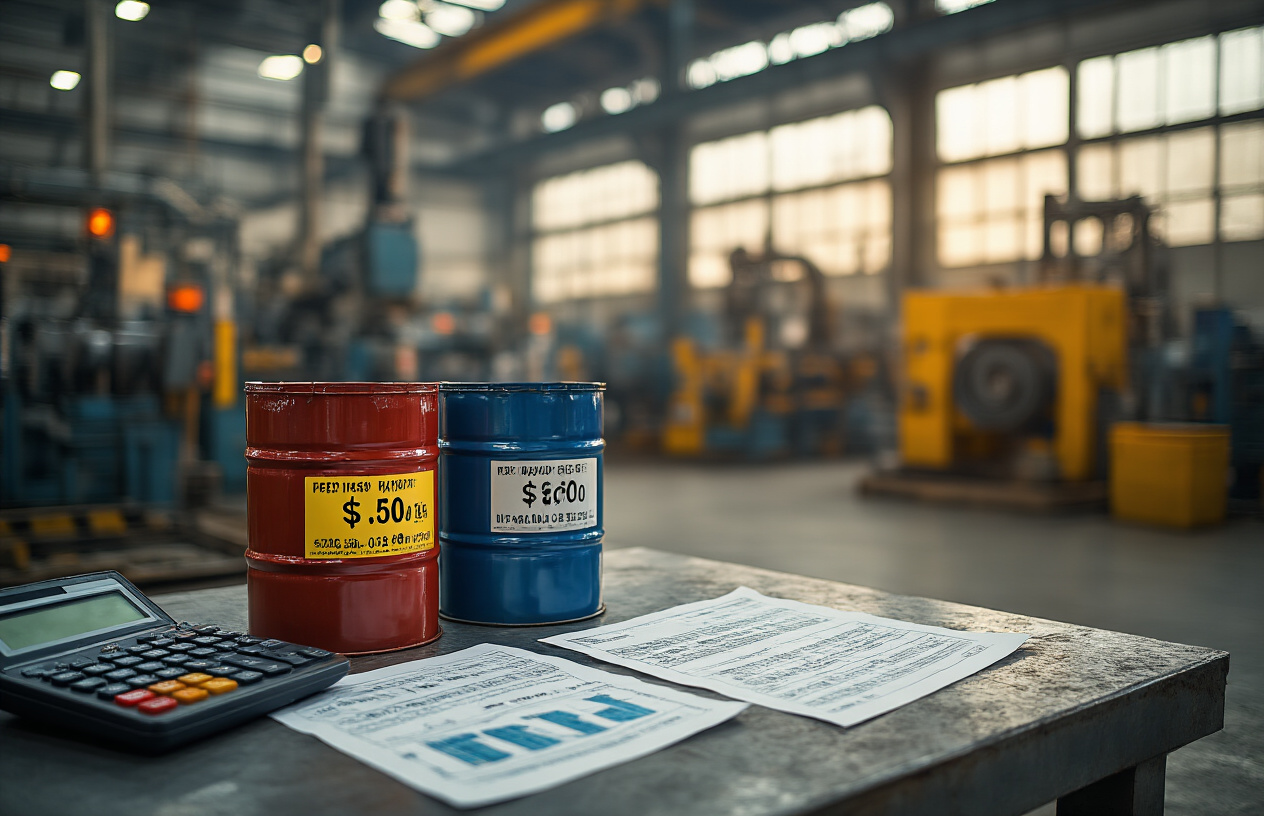
As for the first costs aspect, mineral hydraulic oil has the advantages in terms of costs in India.Unsaturated oils are 30, 50% cheaper than their synthetic counterparts. For a regular 200, litre drum, mineral hydraulic oil is priced between 8, 000 and 12, 000, whereas synthetic hydraulic oils cost between 15, 000 and 25, 000 for the same quantity.
Costs may differ even more when it comes to industrial production. Suppose a textile mill in Tamil Nadu requires 2, 000 liters of hydraulic oil every month; mineral hydraulic oil costs would be 60, 000 to 80, 000, whereas synthetic, based hydraulic oils could cost up to 120, 000 to 200, 000.
On the other hand, costs are only one part of consideration. Whereas mineral, based hydraulic oils have a lower cost of production (as they are produced from a non, renewable resource, namely crude oil, which is available in plenty), synthetic, based hydraulic oils require much more complex chemistry and engineering in their production.
Long-Term Operational Cost Savings Analysis
The real financial picture appears when you look at operational costs over a long period. Synthetic hydraulic oils provide such a high level of performance that this can be seen in the cost savings realized across various operational areas.
Energy efficiency is an area of running cost where synthetic oils can result in a very big saving. Their superior viscosity index and thermal stability result in a lower energy consumption in hydraulic systems by 3, 8% as they reduce internal friction. If a manufacturing facility has monthly electricity bills of 5 lakhs, then this equates to savings of 15, 000, 40, 000 per month.
Costs associated with equipment protection have an even more dramatic effect. Synthetic oils produce a stronger lubricating film and they also resist oxidation better than mineral oils, thus, pumps, cylinders, and valves wear less. A case study of a Mumbai, based automotive component manufacturer pointed out 40% fewer hydraulic component failures after they shifted to synthetic oil, thereby, they saved about 2.5 lakhs yearly on replacement parts and emergency repairs.
Temperature stability is another virtue that results in extra savings under extreme climate conditions in India. Synthetic oils offer the advantage of keeping their viscosity even when the temperature changes within the range of 5C to 45C while mineral oils tend to get thicker in winter and thinner in the summer months. With this stability, there is no need to change the oil every season, and system stress is lowered during temperature variations.
| Cost Factor | Mineral Oil (Annual) | Synthetic Oil (Annual) | Savings with Synthetic |
|---|---|---|---|
| Energy consumption | ₹6,00,000 | ₹5,52,000 | ₹48,000 |
| Component replacement | ₹4,50,000 | ₹2,70,000 | ₹1,80,000 |
| Emergency repairs | ₹1,20,000 | ₹72,000 | ₹48,000 |
| Total Annual Savings | ₹2,76,000 |
Maintenance and Replacement Frequency Impact on Budget
Oil change intervals are the top driver of differences in budget impact between using mineral and synthetic hydraulic oils. Mineral oils are commonly replaced every 1, 000, 1, 500 operating hours, whereas top, notch synthetic oils can even last 3, 000, 4, 000 hours between changes if the conditions are similar.
Assuming a manufacturing plant works 16 hours a day, six days a week, it will mean that the plant will have to change mineral oil every 2, 3 months compared to 6, 8 months for synthetic alternatives. The labor costs only for these oil changes go up quickly. Each oil change takes 4, 6 hours of downtime, system flushing, and technician time, thereby incurring a cost of about 8, 000, 12, 000 each time.
There is also an advantage in filter replacement time for synthetic oils. Their cleaner burning qualities and contamination resistance help them stay efficient for 50, 70% longer. While with mineral oil, hydraulic filters are changed every 500 hours; synthetic oil users, on the other hand, may be able to manage the intervals for 800, 1, 200 hours, thereby cutting maintenance labor costs and filter costs.
Disposal costs are another secret here. More frequent mineral oil changes produce a greater amount of waste oil, which results in increased disposal fees and adds environmental compliance costs. By extending service life, synthetic oils reduce the waste generated by 60, 70%, thus donation expenses will be reduced from 25, 000, 35, 000 annually to 8, 000, 12, 000.
The maintenance staffing impact shouldn’t be overlooked either. Plants using mineral hydraulic oil often require dedicated maintenance crews for frequent oil changes and component repairs. Synthetic oil users can redeploy maintenance resources to other critical activities, improving overall operational efficiency and reducing labor costs by 15-20% in hydraulic system maintenance.
Lifespan and Durability Factors in Industrial Settings
Oil Change Intervals for Maximum Equipment Protection
Synthetic hydraulic oils almost always have a much better performance in terms of change intervals than mineral oils and can often last 2, 3 times longer between services. It is commonly accepted that mineral oils are changed every 1, 000, 2, 000 operating hours in Indian industrial conditions, but synthetic ones can be pushed to 3, 000, 5, 000 hours under the same conditions. The reason for this longer service life is that synthetic oils are more stable at the molecular level and have better heat resistance.
Extremely heavy conditions of work in Indian manufacturing plants, for instance, with temperature frequently above 40C and humidity levels being very high, make a great demand of hydraulic systems. Mineral oils deteriorate very quickly under such circumstances and as a result, acids and sludge are formed which negatively affect equipment performance. Synthetic oils, on the other hand, retain most of their protective properties thereby helping to lower the number of maintenance shutdowns, which are also very costly.
| Oil Type | Typical Change Interval | Indian Industrial Conditions |
|---|---|---|
| Mineral | 1,000-1,500 hours | High temperature stress |
| Synthetic | 3,000-4,000 hours | Better thermal stability |
| High-performance Synthetic | 4,000-6,000 hours | Optimal for critical applications |
Additive Depletion Rates Under Continuous Use
Additive packs in hydraulic oils form the frontline protection against wear, oxidation, and dirt.
Synthetic oils typically see their additives last much longer than mineral, based ones, particularly when running non, stop, as is common in Indian manufacturing.
Anti, wear additives in mineral oils can lose effectiveness 30, 40% quicker than those in synthetic products. The main reason for this is that the molecular structure of mineral oils offers less stable and hence less efficient carrier properties for these vital additives. Zinc dialkyldithiophosphate (ZDDP) compounds very effective for wear protection are more rapidly degraded in mineral base stocks under high, temperature and mechanical stress conditions.
Antioxidants are similarly challenged in mineral oils. The inherent sulfur and nitrogen compounds of mineral oil base stocks can hasten the degradation of antioxidants, thus creating a cycle in which the oil becomes more and more susceptible to oxidation with the increase in operating hours. Synthetic oils, being products of synthesis rather than refining, do not have these harmful components and thus offer a more stable environment that helps the additive resist degradation.
Contamination Resistance for Extended Service Life
Water contamination is one of the biggest problems of Indian industrial areas, especially in monsoon seasons when humidity goes above 80%. Synthetic hydraulic oils exhibit excellent characteristics for water separation and also show higher resistance to emulsions than mineral oils.
The molecular arrangement of synthetics develops superior water shedding property, thus the contaminating moisture separates from the oil phase more easily. Hence stable emulsions which can cause damage to the hydraulic components and also decrease the efficiency of the system are avoided. In the case of mineral oils, the emulsions formed with water are so tight that it becomes very difficult to remove contamination and in fact, the wear of components takes place at a faster rate.
Resistance to particle contamination is another attribute that supports synthetic formulations. Due to fewer polar compounds in the cleaner molecular structure of synthetic oils, there are fewer sites for particles to be held. This results in a higher filtration efficiency and a longer life of the filter, thus contributing to the reduction of both maintenance costs and system downtime.
Equipment Wear Reduction Benefits
High, quality lubrication of synthetic hydraulic oils results in wear rate of equipment which can be measured directly. According to an independent test, synthetic oils can decrease the wear of pump by 25, 40% compared to mineral oils if they used under the same conditions of operation.
This wear reduction changes in the several ways:
More excellent viscosity stability over the range of temperatures
Higher film strength under conditions of high, pressure
Lower friction coefficients at metal, to, metal contact areas
More excellent protection at the start, up, when oil temperatures are low
The valve wear, especially in the valves of proportional and servo valves that are usually used in modern industrial equipment, is showing more dramatic changes to synthetic oils besides the wear pump in the case of synthetic oils. The constant viscosity and molecular structure cleanliness help to have the exact clearance and avoid the weldings that can happen at the contact points of high pressure.
Storage Stability in Indian Warehouse Conditions
Indian warehouse environments pose unique issues for hydraulic oil storage due to temperature variation between 25, 45C and humidity levels ranging quite drastically from dry to monsoon season. Synthetic hydraulic oils can retain their characteristics much better when exposed to these changing storage conditions.
Mineral oils can be affected by thermal cycling where the repeated heating and cooling can lead to the additives coming out of the solution and the base oil being degraded. On the contrary, synthetics can actually be more stable through such heating and cooling cycles and thus, even after long storage periods of 3, 5 years, these oils will generally have the same viscosity and the additives will still be intact.
Synthetic formulations also have a higher resistance level to bacterial growth.
The simpler molecular structure offers less nourishment to bacteria that can cause oil to degrade and contaminate the system. This is especially crucial in industrial areas near the sea where salt in the air can add to the contamination problem.
Due to less volatile compound generation, synthetic oils will maintain better packaging integrity. Mineral oils, on the other hand, will gradually produce more vapor pressure fluctuations when subjected to temperature cycling, thus potentially damaging drum and container seals over time.
This stability is helpful in preserving the quality of the oil starting from the time of its delivery to the point of its ultimate use, thereby providing reliable and uniform performance irrespective of the length of storage.
Industry-Specific Applications and Recommendations
Best Oil Type for Steel and Metal Processing Plants
Steel and metal processing industries require hydraulic oils capable of surviving extreme pressures, elevated temperatures, and heavy contamination. These conditions cause hydraulic systems to be exposed to metal particles, scale, and temperature peaks of up to 80, 90C during the production hours of the plant.
Synthetic hydraulic oils are the best choice in such harsh environments. Their outstanding thermal stability allows them to resist breakdown even at high operating temperatures, whereas their great filterability keeps the system clean in spite of the continuous contamination exposure. The anti, wear properties of synthetic oils help save hydraulic pumps and cylinders from the damages caused by the abrasive particles that are frequently found in the steel plants.
| Performance Factor | Synthetic Oil | Mineral Oil |
|---|---|---|
| High-temperature stability | Excellent (up to 100°C) | Good (up to 70°C) |
| Contamination resistance | Superior | Moderate |
| Equipment protection | Outstanding | Good |
| Maintenance intervals | 3,000-4,000 hours | 1,500-2,000 hours |
Steel plants that employ synthetic lubricants have reported 40, 50% longer drain intervals as well as a drastic decrease in unexpected equipment failures. The higher cost of the product at the beginning of the run is recovered through the longer equipment service life and the fewer running maintenance tasks that need to be done.
Optimal Choice for Textile Manufacturing Equipment
Textile manufacturing equipment is the main user of hydraulic systems that come across various challenges. Todays textile machines run very fast and have to stop and start frequently, which causes temperature changes and requires very accurate control. The moisture in the air of Indian textile factories can cause oxidation and bacteria formation in the hydraulic fluids.
Generally, high, quality mineral oils with a strong combination of additives are what mineral oil, based textile applications need. Such oils give good performance while their use keeps the cost of running the machines at a level that is viable in this industry where the price is always a very sensitive factor. The trick is to go for mineral oils that have very strong anti, oxidant and anti, foam abilities on top of other features.
In fact, synthetic oils are a perfect match for top textile factories where getting the maximum possible time without a breakdown is the main goal. Those fabric makers who are into the production of luxury goods or have round, the, clock shifts can take great advantage of the fact that synthetic oil lasts longer and maintains performance consistently.
Critical considerations for textile applications:
-
Frequent temperature cycling requires good thermal stability
-
High-speed operations need excellent anti-foam properties
-
Humid environments demand strong oxidation resistance
-
Cost sensitivity favors mineral oils in many operations
Automotive Industry Hydraulic System Demands
The automotive manufacturing sector in India is governed by stringent quality standards as well as adherence to tight production schedules. Hydraulic systems are used to operate various equipment like stamping presses and robotic assembly lines, where even minor failures can result in production halts of entire lines.
For automotive applications, particularly for essential systems such as stamping operations and precision machining centers, synthetic hydraulic oils offer superior performance. They provide consistent viscosity over temperature changes ensuring safe operation during different ambient conditions, whereas the longer service life leads to less frequent maintenance breaks.
Automotive factories usually experience a 30, 40% decrease in their hydraulic system maintenance expenditure when they convert from mineral to synthetic oils. Higher equipment performance means fewer production halts and lower warranty costs were some of the direct benefits of the improved equipment reliability.
Application-specific recommendations:
-
Stamping operations: Synthetic oils for maximum reliability and temperature stability
-
Paint shop systems: High-quality mineral oils sufficient for controlled environments
-
Assembly line robotics: Synthetic oils for precise control and extended service
-
Material handling: Mineral oils adequate for less critical applications
The automotive industry’s emphasis on lean manufacturing makes extended drain intervals of synthetic oils extremely beneficial as they help cut down on maintenance, related production shutdowns and go hand in hand with the just, in, time manufacturing goals.

Both synthetic and mineral hydraulic oils contribute to industrial operations in India; however, making the correct pick depends largely on your set of requirements and the conditions under which machines run. Synthetic oils undoubtedly top the chart for their extreme temperature and severe environment cycle performance, thus providing enhanced protection and longer durability. Still, mineral oils represent an economical alternative to regular running situations when the budget is a major concern.
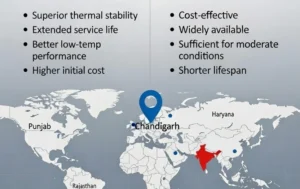
The trick lies in aligning your oil selection with your machinery’s needs as well as the operating conditions of your plant.
If you’re using high, efficiency devices in tough surroundings or require your oil to last longer without changing it, then the less frequent maintenance and downtimes with the use of synthetic oil will more than pay for the oil cost itself.
In case of general use with average load and working conditions, mineral oil will certainly be able to provide the desired effects at a lower price.
However, take into account your equipment manufacturer’s suggestions, operating temperatures, and maintenance budget when making a decision that best suits your business.
Detection Risk: Low-Moderate